14-day sleep journal
The same template we use for intake. Tracks bedtime, wake time, perceived quality, daytime energy, and the small variables that shift sleep architecture. PDF.
The practical materials we use in clinic — sleep journals, food-mood logs, breath-work guides, reading lists. Free to download. Useful whether you become a patient or not.
The same template we use for intake. Tracks bedtime, wake time, perceived quality, daytime energy, and the small variables that shift sleep architecture. PDF.
A simple weekly log that surfaces the eating-pattern signals you rarely notice in the moment. PDF, printable.
The breath-work pattern at the heart of HRV biofeedback — six breaths per minute, in plain language, with a starter audio track.
A two-page checklist for the everyday inputs that quietly wear down focus and recovery — the ones you stop noticing. Useful before, during, and after a course of care.
Books we recommend — by neuroscientists, clinicians, and the occasional thoughtful generalist. Curated and revisited annually.
A one-page explainer to read before a qEEG appointment — what we measure, what to wear, what to expect afterwards.
These resources are general health information, not personalised clinical advice. They aren't a substitute for assessment by a registered health practitioner. If you or someone you know is in crisis, call 000 or Lifeline 13 11 14.
The same methodology, every tier
14 brain networks. Quantitative measurement at the start, the middle, and the end. Co-care with your GP and psychologist — we work alongside, not instead of.
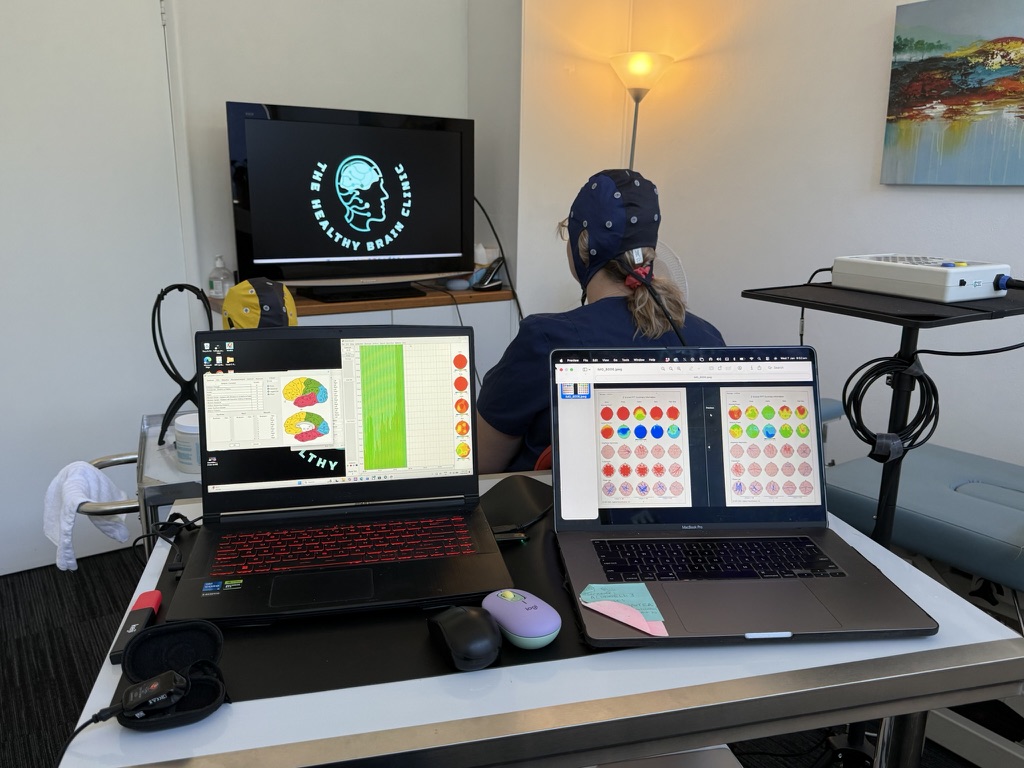
19-channel quantitative EEG, processed against age-matched norms via NeuroGuide. swLORETA source localisation maps activity to specific networks.
swLORETA-guided neurofeedback paired with HRV biofeedback at resonant frequency. Network-targeted protocols, not one-size-fits-all.
qEEG comparison at mid-cycle and end of programme. If the data isn’t moving in the expected direction, we change the plan — not the calendar.
One methodology across every tier — from the free Snapshot through to the in-clinic 12-week programme.
Four tiers of care
Every tier uses the same methodology — examination first, then targeted intervention. Choose the depth that fits your concern, your timeline, and your budget.
A short educational questionnaire screening your three core networks — Default Mode, Salience and Central Executive — with a personalised starting protocol.
Full 14-network mapping, 16-region BRLF screening, a 30-day guided programme and content library — 30 days of access.
Real-time HRV biofeedback at home in the NeuroZen app, the full 14-network assessment, a daily 3-minute diary, AI-driven weekly feedback and monthly progress reports.
In-clinic qEEG at the start and again at week 11, a weekly in-clinic visit for 12 weeks, personalised swLORETA neurofeedback, and a clinician-led plan designed by Dr Ash.
All tiers complement, not replace, your GP, psychologist, or psychiatrist. We co-care.
Two ways to begin
Examination, not assumption.
Take the free Brain Health Snapshot to orient yourself, or book a consultation with Dr Ash Connell. Both are easy to step away from, and either way you’ll leave with a clearer picture of what’s actually going on.
Or call (03) 5593 2934 — reception will take a few details and call you back within one business day.