
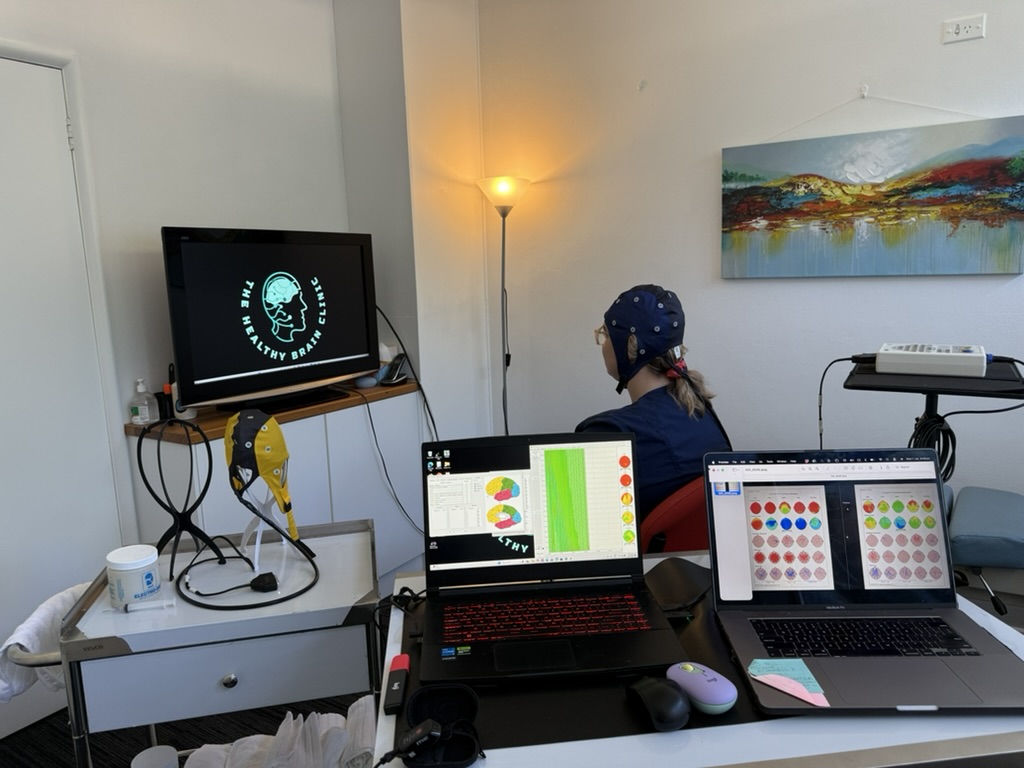
A measurement of how your brain is working.
A quantitative electroencephalogram — qEEG — is a structured way of recording the brain's electrical rhythms across 19 sites on the scalp, then comparing those rhythms to a normative database of thousands of age-matched recordings.
The output is a set of brain maps showing where your patterns sit relative to the norm — too much of a particular rhythm in one region, too little in another, regions that aren't connecting smoothly. Together with the conversation, the history, and any assessments your other clinicians have done, this gives us the information to build a personalised plan.
What qEEG is not. It is not a diagnostic test. On its own, it does not identify a specific medical or psychiatric condition. It is information that informs clinical reasoning — nothing more, and we're careful to say so.